.svg)
What is web accessibility?
Web accessibility (A11Y) is the practice of designing websites that everyone can use, including people with disabilities. It is governed by the WCAG standards, is a legal obligation in France (RGAA), and is a genuine lever for UX quality.














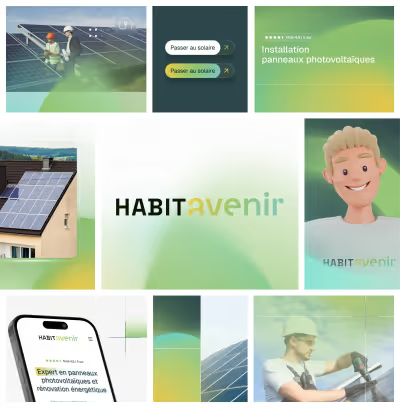




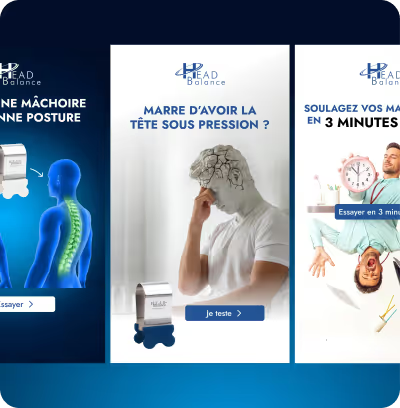

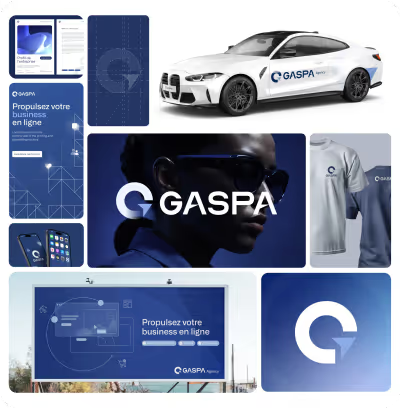
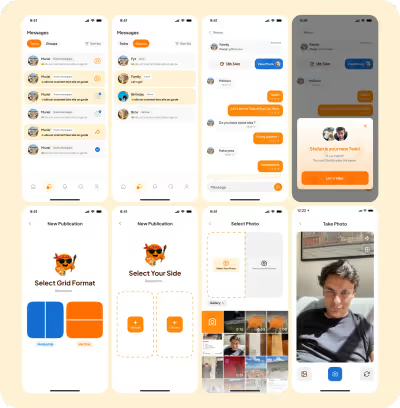



















Unlimited requests, fast results
Submit as many briefs as you need. Our plans allow you to manage a continuous flow of design requests, without limits and without friction, and at an economic cost.

The 4 WCAG principles
Perceivable: content that can be detected (alt text, captions, contrast). Operable: an interface that works with a keyboard. Understandable: clear, predictable navigation. Robust: code compatible with current and future technologies.
Essential best practices
Semantic HTML tags, alt attributes on images, sufficient contrast ratios, full keyboard navigation, explicit form labels, and a consistent heading structure (h1 > h2 > h3).
Unlimited requests, fast results
Submit as many briefs as you need. Our plans allow you to manage a continuous flow of design requests, without limits and without friction, and at an economic cost.
Conclusion
Web accessibility is not a bonus but a quality standard. It improves the experience for everyone, strengthens SEO and protects against legal risk.
Key takeaways
- Making the web usable by everyone
- 4 WCAG principles: Perceivable, Operable, Understandable, Robust
- A legal obligation in France (RGAA)
- Alt text, contrast and keyboard navigation are the quick wins
- Also improves SEO and overall UX
Unlimited requests, fast results
Submit as many briefs as you like. Our plans let you manage a continuous flow of design requests, without limits or friction, and at an economical price.